Deck Cleaning & Pressure Washing
Deck-specific cleaning that lifts mildew, algae and gray weathering without damaging wood fibers or composite surfaces.
Cleaning Done Right, Not Just Fast
Plenty of companies advertise a cheap, $99 "blast-and-go" pressure wash — but generic high pressure on the wrong setting can strip wood fibers and drive water into seams it shouldn't reach. We do it differently: deck-specific cleaning products and controlled pressure — generally 1,500 to 3,000 PSI through a 25° or 40° nozzle for wood surfaces — to lift mildew, algae and gray weathering safely, whether it's a wood deck, a Trex composite deck, a fence, or a boat dock.
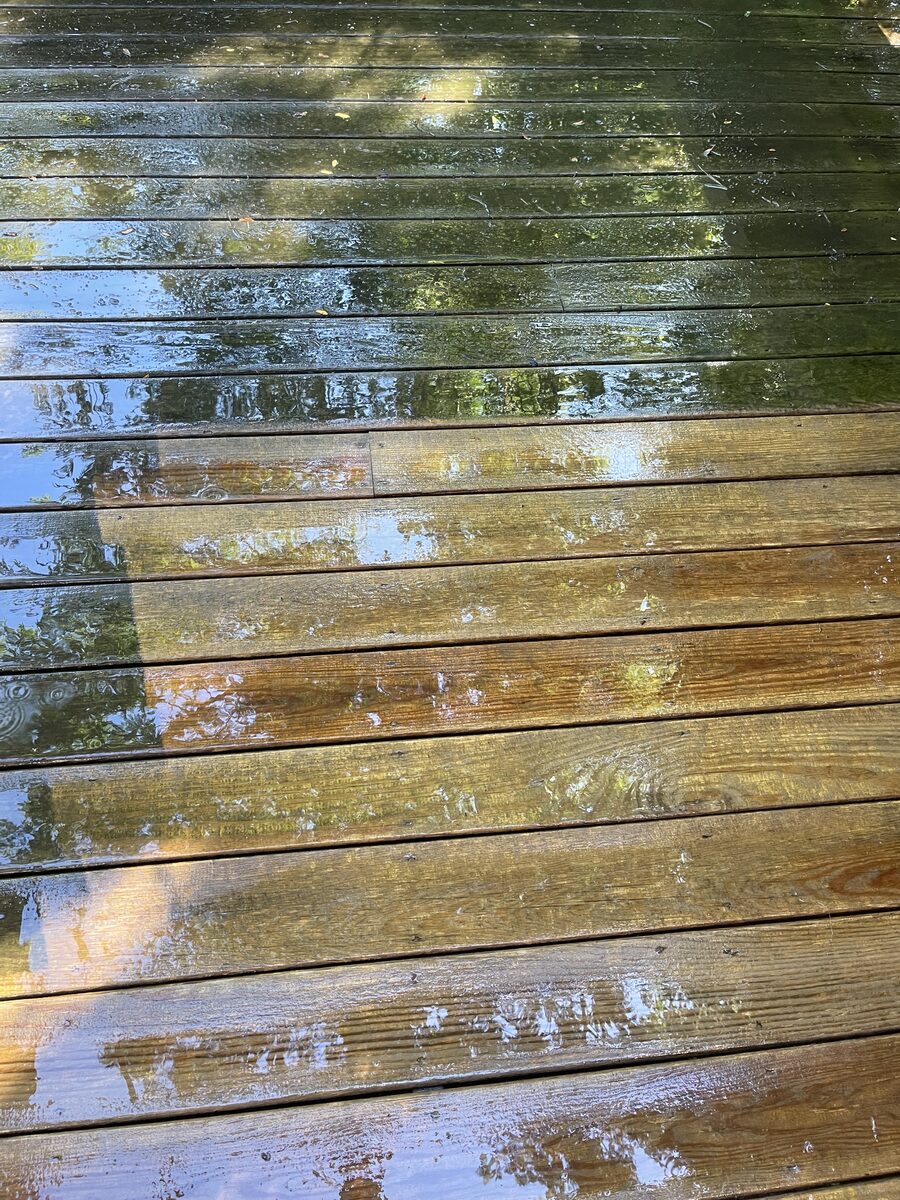
Every deck gets tested on a small, inconspicuous area first, and we never let the wand sit in one spot long enough to gouge the wood. Once the surface is clean, we rinse away all soap and cleaner residue and let the deck dry completely before any sealant or stain goes down — skipping that drying step is one of the most common reasons a fresh coat of stain fails within a year.
Composite and Trex decking needs an entirely different approach than wood. Early-generation composite without a protective cap can mildew and stain if it isn't cleaned semi-annually, while newer high-performance Trex lines like Transcend, Enhance and Lineage generally only need soap and water or a gentle wash. In every case, excessive pressure can damage uncapped composite boards, so we adjust our pressure and technique to the specific material we're working on.
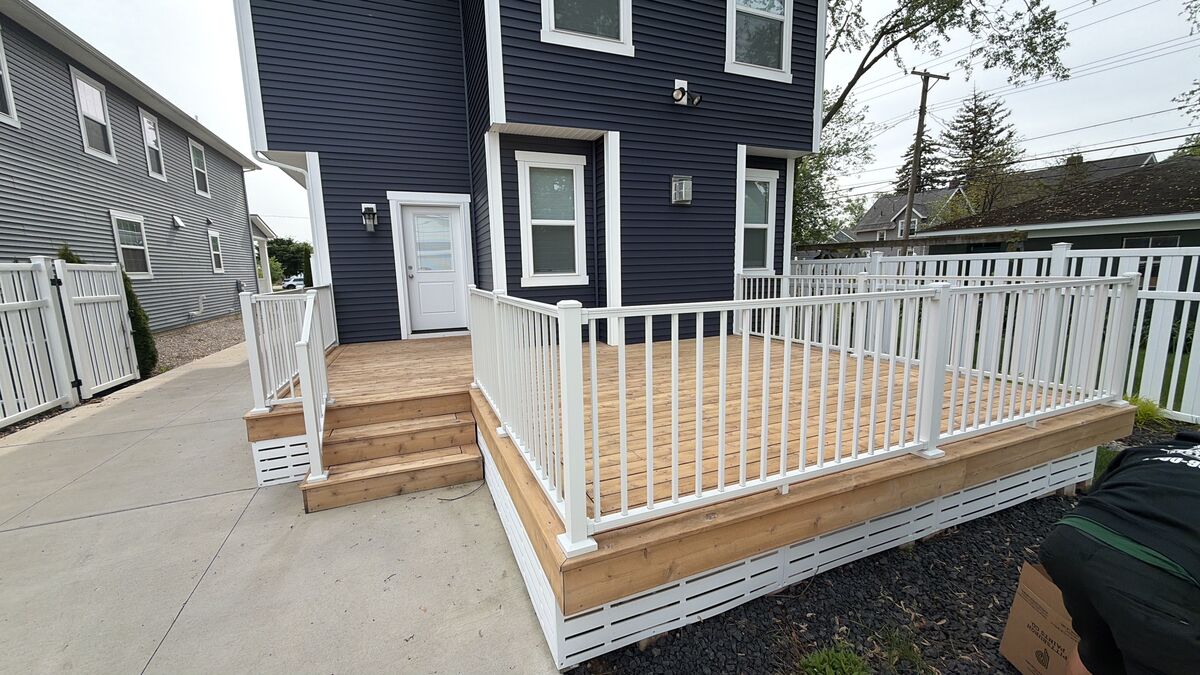
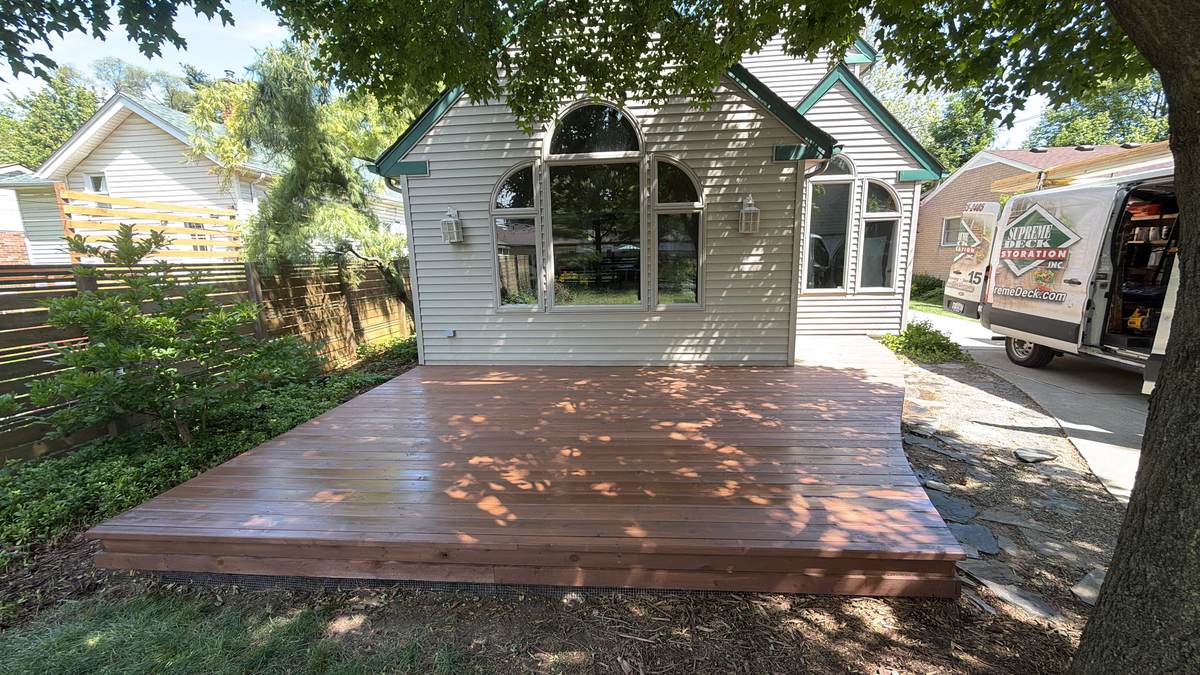
Our deck sanding service is designed to restore and refine the horizontal wood surfaces of your deck by removing weathered, rough, and deteriorated wood fibers. Sanding creates a smoother, cleaner surface while preparing the wood for proper stain or protective coating application. This process also helps promote more even product absorption and a consistent, long-lasting finish.
Please note: We are able to sand and remove existing oil-based stains as part of the restoration process. However, we do not offer the removal of paint or solid-color stains from deck surfaces. These coatings require specialized removal methods and are not compatible with our standard restoration process.
- Safe for wood & composite decking
- Removes mildew, algae & gray weathering
- Controlled PSI & nozzle selection by material
- Prepares surface for staining/sealing
- Fence, dock & play set cleaning available
- Landscaping & nearby furniture protected during cleaning
Deck Cleaning Questions We Hear a Lot
Three decades of cleaning Southeast Michigan decks means we've heard just about every question there is.
Why can't I just rent a pressure washer and do it myself?
How is cleaning a composite deck different from cleaning wood?
How often should I have my deck professionally cleaned?
Can you clean fences, docks and play sets at the same time?
Deck Cleaning Near You
We clean wood and composite decks across Metro Detroit and Southeast Michigan. Pick your town to see recent local work.
Ready for a Cleaner Deck?
Free estimates — hand-brushed by a TrexPro Platinum contractor Michigan has trusted since 1991.